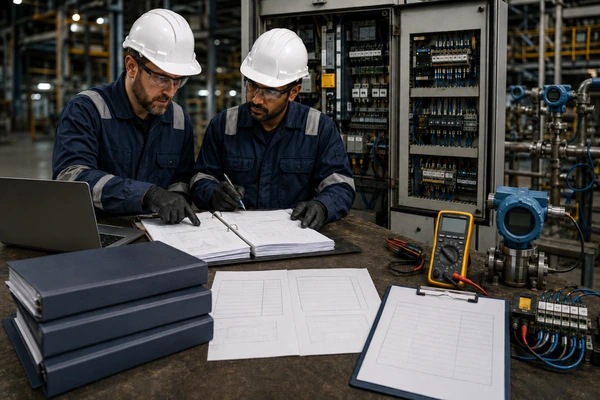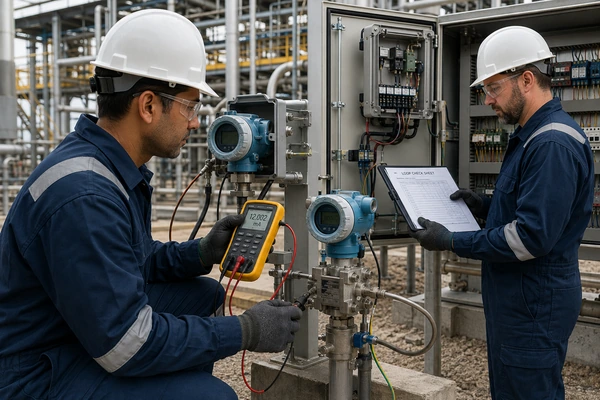
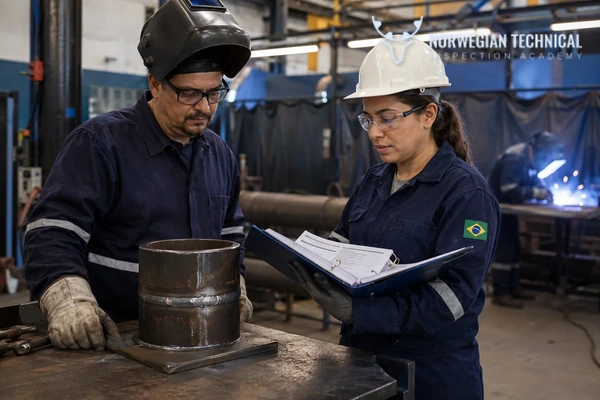
WPS, PQR and WQT are three of the most important welding qualification documents inspectors need to understand. A weld may look visually acceptable, but if it was made without the correct welding procedure or by an unqualified welder, it may still be unacceptable from a QA/QC point of view.
For welding inspectors, QA/QC inspectors, vendor inspectors, NDT technicians and fabrication quality teams, these documents are not just paperwork. They are evidence that welding is controlled, qualified and traceable.
In simple terms, the WPS tells the welder how the weld must be made. The PQR proves that the welding procedure has been tested and qualified. The WQT or WPQ confirms that the welder is qualified to perform the required welding work.
This article explains WPS, PQR and WQT in a practical way for inspectors who need to review welding documentation, verify compliance and support final acceptance.
For the full inspection workflow, including weld defects, NDT methods, report review and inspector duties, see the complete welding and NDT inspection guide.
NTIA’s Welding and Non-Destructive Testing Training Course also covers welding procedures, qualification records, inspection control, NDT methods and QA/QC documentation.
WPS, PQR and WQT are welding qualification documents used to control how welding is performed and accepted.
| Document | Full Name | Main Purpose |
| WPS | Welding Procedure Specification | Defines how the weld must be made |
| PQR | Procedure Qualification Record | Proves the welding procedure was qualified |
| WQT / WPQ | Welder Qualification Test / Welder Performance Qualification | Confirms the welder is qualified to weld |
These documents work together. A WPS without a supporting PQR may not be acceptable. A qualified procedure is not enough if the welder is not qualified. A qualified welder still needs to follow the approved WPS.
For inspectors, the main question is not only “Do these documents exist?” The better question is: Do these documents correctly support this weld, this material, this process and this project requirement?
A WPS, or Welding Procedure Specification, is a written instruction that defines how a weld must be produced.
It usually includes information such as:
The WPS helps make welding repeatable and controlled. It gives welders and inspectors a clear reference for what is required.
For example, during welding inspection, the inspector may check whether the welder is using the correct process, consumable, preheat temperature and pass sequence according to the WPS.
A WPS should be available before welding starts. If welding begins without an approved WPS, this may create a serious quality issue, even if the finished weld looks visually acceptable.
A PQR, or Procedure Qualification Record, is the record that proves a welding procedure has been tested and qualified.
While the WPS is an instruction, the PQR is evidence. It records the actual welding variables used during qualification and the test results that supported approval of the procedure.
A PQR may include:
The PQR supports the WPS. It shows that the procedure can produce acceptable welds when tested under controlled conditions.
For inspectors, one of the most important checks is whether the WPS is properly supported by a relevant PQR. A WPS should not be treated as valid only because it has a document number. It must be backed by the correct qualification record where required.
WQT means Welder Qualification Test. WPQ means Welder Performance Qualification. In practice, both terms are used to confirm that a welder is qualified to perform a specific type of welding work.
The WQT or WPQ focuses on the welder’s ability, not the welding procedure itself.
Welder qualification may depend on:
A welder may be qualified for one process, material or position but not another. For example, a welder qualified for one welding process is not automatically qualified for all welding processes. A welder qualified in one position may not automatically be qualified for all positions.
Inspectors should always check whether the welder qualification matches the actual production weld.
A simple way to remember the difference is:
| Document | Question It Answers |
| WPS | How should the weld be made? |
| PQR | Has this welding procedure been qualified? |
| WQT / WPQ | Is this welder qualified to perform this weld? |
These documents should not be confused with each other.
The WPS is not proof by itself. The PQR is not an instruction for production welding. The WQT/WPQ does not qualify the welding procedure; it qualifies the welder.
A strong welding inspection process needs all three to be aligned.
WPS, PQR and WQT matter because welding quality depends on procedure control and personnel qualification.
Without these documents, the project may face:
A weld can look clean and still be unacceptable if the wrong WPS was used or the welder qualification does not cover the work performed.
This is why inspectors should check welding documents before welding starts, not only after the weld is complete.
For common physical weld issues that may still appear even when documents are available, see welding defects explained for inspectors.
When reviewing a WPS, inspectors should confirm that it is approved, current and suitable for the actual job.
Important checks include:
The inspector should also confirm that the WPS matches the actual welding activity. A WPS written for a different material, thickness, joint type or process may not be valid for the weld being inspected.
When reviewing a PQR, inspectors should confirm that it supports the WPS and includes the required qualification evidence.
Important checks include:
The PQR should not be reviewed as a generic certificate. It must be technically relevant to the WPS and production weld.
When reviewing welder qualification records, inspectors should confirm that the welder is qualified for the actual production weld.
Important checks include:
Welder qualification should also be traceable to weld maps, weld logs or production records. If the weld map shows a welder ID, that ID should match a valid qualification record.
Welding documentation problems are common during fabrication and vendor inspection.
Typical issues include:
These issues can delay inspection release, pressure testing, shipment or project handover.
For inspectors, documentation review is not an administrative task. It is part of technical acceptance.
Welding qualification documents and NDT records should support each other.
The WPS controls how the weld is made. The PQR proves that the procedure was qualified. The WQT/WPQ confirms that the welder is qualified. NDT then provides evidence about the condition of the completed weld.
However, NDT cannot fix poor qualification control. A weld may pass NDT and still be questioned if the correct procedure or welder qualification was not used.
Inspectors should connect:
For NDT documentation control, see the NDT report review checklist.
Use this compact checklist when reviewing welding qualification documents.
For visual and in-process inspection control, see the visual welding inspection checklist.
Inspectors should avoid these common mistakes:
A good inspector looks at the complete chain of evidence, not one document in isolation.
A WPS, or Welding Procedure Specification, is a written document that defines how a weld must be made. It includes details such as welding process, material, filler metal, joint design, preheat, interpass temperature and other welding variables.
A PQR, or Procedure Qualification Record, is the record that proves a welding procedure has been tested and qualified. It supports the WPS and provides evidence that the procedure can produce acceptable welds.
WQT means Welder Qualification Test. It confirms that a welder is qualified to perform a certain type of welding work according to the applicable code, process, material, thickness range and position.
WQT usually refers to the welder qualification test, while WPQ means Welder Performance Qualification. Both terms relate to confirming that the welder is qualified for the required welding work.
Yes. A weld may be unacceptable if it was made without the required approved WPS, even if the visual appearance seems acceptable. Welding documentation is part of technical acceptance.
No. The WPS is the instruction for welding. The PQR is the qualification record that supports and validates the procedure.
No. NDT helps verify weld condition, but it does not replace procedure qualification or welder qualification. Welding quality requires both proper qualification control and inspection/testing.
WPS, PQR and WQT are essential documents in welding inspection. They prove that welding is not being performed randomly, but under controlled and qualified conditions.
The WPS defines how the weld must be made. The PQR proves that the welding procedure has been qualified. The WQT or WPQ confirms that the welder is qualified for the required work.
For inspectors, the key is to check that these documents are approved, relevant, traceable and aligned with the actual weld being inspected. A clean-looking weld is not enough if the procedure, qualification or documentation is wrong.
Strong review of WPS, PQR and WQT helps prevent nonconformities, reduce repair risk, improve documentation quality and support final project acceptance.
For structured learning, NTIA’s Welding and Non-Destructive Testing Training Course covers welding procedures, welder qualification, NDT methods, defect recognition and QA/QC documentation. You can also check upcoming dates in the NTIA training calendar.

At NTIA (Norwegian Technical Inspection Academy), we specialize in delivering world-class training programs in vendor inspection, quality surveillance, and technical compliance – specifically tailored for professionals in the oil, gas, and energy industries.
Copyright © 2025 by NTIA. All Rights Reserved.