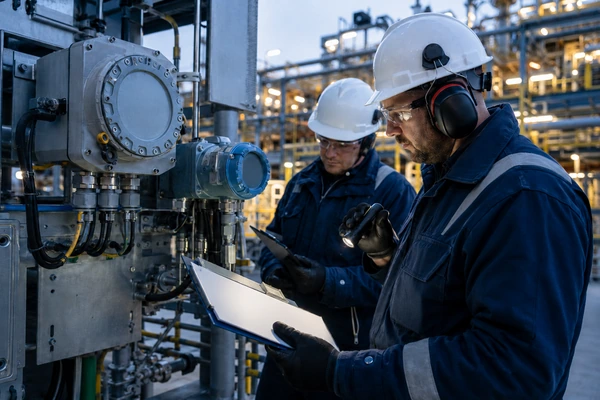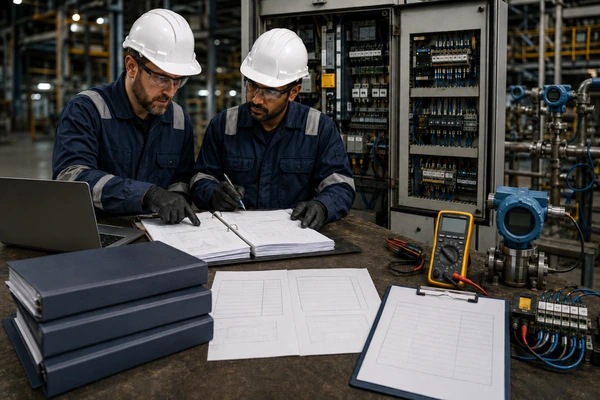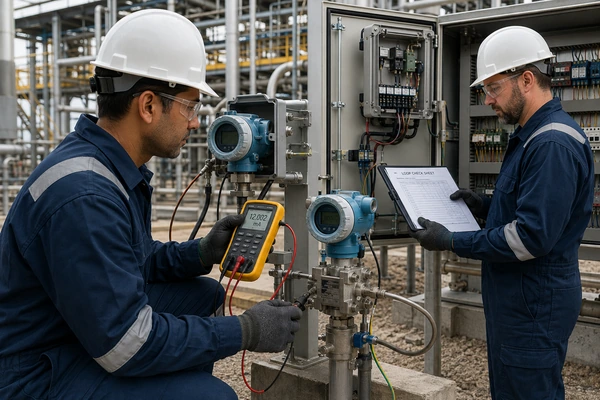
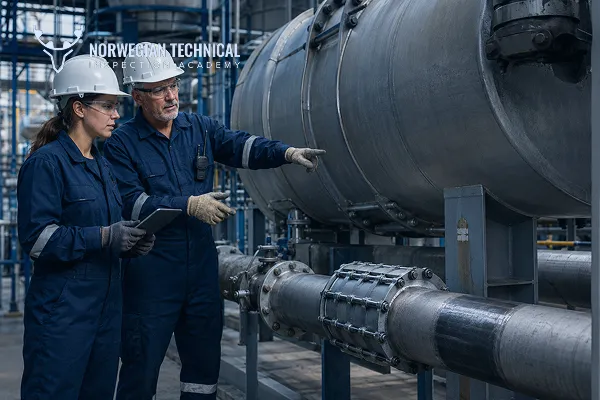
When pressure equipment or piping is damaged, the repair method should not be selected only because it is fast, familiar or available.
A repair on pressure-retaining equipment affects safety, reliability, inspection planning and future asset integrity. The key question is not just “How can we fix it?” but:
Which repair method is technically suitable for this damage, this equipment, this service condition and this level of risk?
This is why technical teams need to understand the main types of pressure equipment repairs and how each one connects with inspection, testing, documentation and continued operation.
ASME PCC-2 is one of the key references for repair of pressure equipment and piping after equipment has been placed in service. ASME describes PCC-2 as providing repair methods for equipment, piping, pipelines and associated equipment, including relevant design, fabrication, examination and testing practices.
For a practical explanation of how the standard governs repair selection, inspection, testing and documentation, read our ASME PCC-2 repair standard guide.
For teams that need structured learning, NTIA’s Repair Pressurized Equipment Training helps connect repair standards with practical inspection and maintenance decisions.
Pressure equipment repair can be classified in two different ways: by repair method and by repair status/design intent.
Repair methods include:
Repair status / design intent includes:
So, temporary and permanent repairs are not repair methods by themselves. They describe whether the selected repair solution is intended to be used for a limited period until final repair/replacement, or as a long-term permanent solution
The right repair method depends on:
A repair should never be treated as an isolated maintenance task. It should be part of the wider Asset Integrity Management process.
Welded repairs are among the most common repair methods for pressure equipment and piping.
They may be used when damaged metal needs to be restored, reinforced or replaced.
Examples include:
Welded repair can be effective, but it requires strong technical control.
Teams need to consider:
A welded repair may look simple on site, but for pressure-retaining components, it must be controlled as an engineering repair.
Poor welding can introduce new defects, residual stress, hardness problems, cracking risk or future inspection challenges.
Mechanical repairs use physical devices or fittings to restore containment, reinforce damaged areas or control leakage without relying mainly on welding.
Examples include:
Mechanical repairs can be useful when welding is not suitable, when hot work is restricted or when shutdown time is limited.
However, they still require technical review.
The team should check:
A clamp should not be treated as a shortcut. It must be suitable for the damage, the operating condition and the required repair life.
Composite repairs are used in some situations to reinforce damaged pressure equipment or piping, especially where external reinforcement is required.
They may be considered for certain types of wall loss, external corrosion or local damage, depending on the service and repair design.
Composite repair quality depends heavily on:
This is why composite repair should not be described simply as “wrapping the pipe.”
It is a controlled repair method with technical limitations.
Teams should ask:
ASME’s PCC-2 training overview lists nonmetallic composite repair systems among specific repair methods covered in PCC-2 learning.
Non-metallic repairs may include bonded repair systems, sealants or other engineered non-metallic repair solutions.
These repairs can be useful in specific conditions, but they require careful control because they are sensitive to:
Non-metallic repair methods should be reviewed against the actual operating environment. A repair that works in one service may not be suitable in another.
The main training point is simple:
Non-metallic repair is not automatically weaker or stronger than metallic repair. It is only suitable when the repair design, installation and service conditions support its use.
Sometimes the best repair is not a local repair at all.
Replacement may be required when the damage is too severe, too widespread or too uncertain to justify a localized repair.
Examples include:
Replacement may be more expensive or require more downtime, but it can be the better asset integrity decision when continued repair creates long-term risk.
Teams should consider replacement when:
Replacement should still be documented as an integrity decision, not just a maintenance action.
A temporary repair is used to control risk for a defined period until permanent action can be taken.
Temporary repairs can be useful, especially when immediate shutdown is not practical.
But they must be controlled.
A temporary repair should have:
The biggest problem with temporary repairs is not that they exist.
The problem is when temporary repairs become permanent by neglect.
If a temporary repair has no review date, no owner and no follow-up plan, it becomes an unmanaged integrity risk.
A permanent repair is intended to restore the equipment to an acceptable long-term condition.
It requires a stronger technical basis than a temporary repair.
A permanent repair should consider:
Permanent does not mean “never review again.”
Even permanent repairs should remain visible in the asset history, inspection plan and integrity records.
Choosing a repair method should be a structured decision.
Before selecting a repair, teams should ask:
This is where Fitness-for-Service / FFS and Risk-Based Inspection / RBI may support the decision.
The Fitness-for-Service / FFS Guide explains how teams evaluate whether damaged equipment can continue operating safely. The Risk-Based Inspection / RBI Guide explains how risk-based thinking supports inspection planning and prioritization.
Repair decisions become stronger when these methods are connected.
Speed matters, but the fastest option is not always the safest or most reliable option.
If the root damage mechanism is still active, the repair may only delay the next failure.
For example, repairing corrosion without improving corrosion control may lead to repeat damage.
Temporary repairs must be reviewed and tracked. Otherwise, they become hidden integrity risks.
A repair should be inspected and tested as required. Without verification, the team cannot confirm the repair quality.
Repair records should show what was damaged, what repair was selected, why it was selected, who approved it and what inspection or testing was completed.
Repair decisions involve more than choosing a method.
Technical teams need to understand:
For wider asset integrity context, the Asset Integrity Management guide explains how inspection, maintenance, repair and reliability decisions fit into one framework.
Training helps teams avoid treating repairs as isolated fixes. It helps them understand repair as part of risk control and continued safe operation.
The main types of pressure equipment repairs include welded repairs, mechanical repairs, composite repairs, non-metallic repairs, component replacement, temporary repairs and permanent repairs.
Each repair type has advantages, limitations and inspection requirements.
The best repair is not always the quickest repair. It is the repair that is technically suitable, properly inspected, documented and aligned with the equipment’s future operating condition.
If your team needs stronger capability in pressure equipment and piping repair decisions, explore NTIA’s Repair Pressurized Equipment Training or contact NTIA to discuss a dedicated training option.
The main types of pressure equipment repairs include welded repairs, mechanical repairs, composite repairs, non-metallic repairs, component replacement, temporary repairs and permanent repairs.
A temporary repair controls risk for a limited time until permanent action is completed. A permanent repair is intended for long-term service and requires stronger technical justification, inspection and documentation.
Welded repair may be suitable when damaged metal needs to be restored, reinforced or replaced, but it requires proper welding procedures, inspection, testing and material compatibility review.
Composite repairs may be acceptable in specific conditions when properly designed, installed, inspected and documented. Suitability depends on damage type, service condition, temperature, pressure and repair design.
Repair training helps inspection, maintenance and asset integrity teams understand repair methods, limits, inspection requirements, documentation and the connection between ASME PCC-2, FFS, RBI and asset integrity decisions.

At NTIA (Norwegian Technical Inspection Academy), we specialize in delivering world-class training programs in vendor inspection, quality surveillance, and technical compliance – specifically tailored for professionals in the oil, gas, and energy industries.
Copyright © 2025 by NTIA. All Rights Reserved.