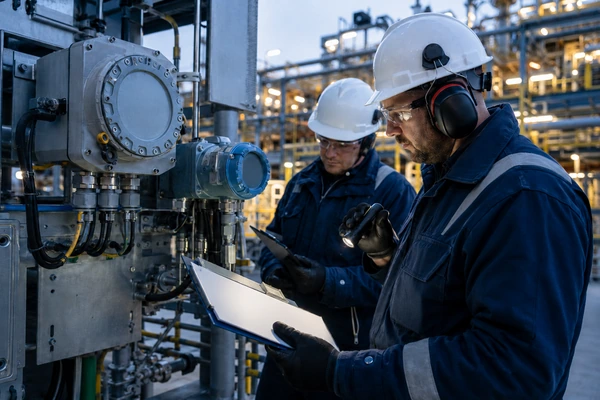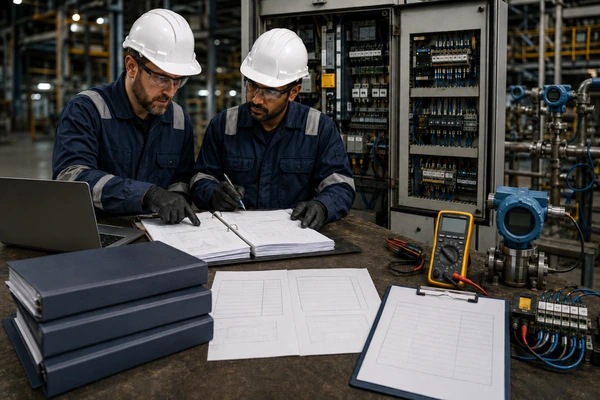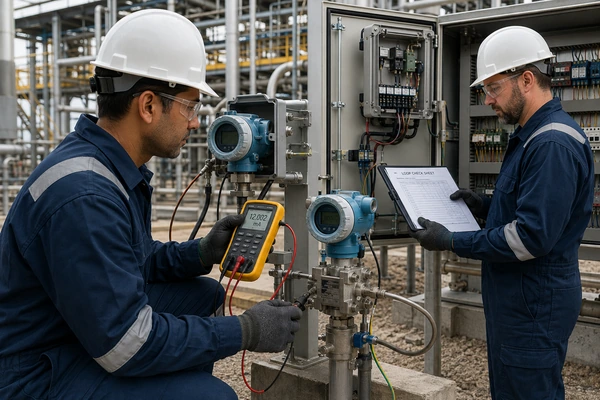
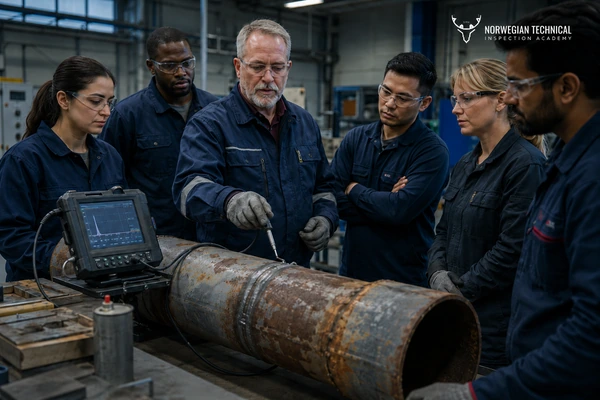
Asset integrity problems are rarely caused by one missing inspection alone. In many industrial facilities, the larger issue is that inspection, reliability, maintenance, engineering and operations teams do not always use the same technical language when discussing equipment condition, risk, repair decisions or continued operation.
One team may focus on inspection findings. Another may focus on maintenance execution. Engineering may need a Fitness-for-Service assessment. Operations may need to know whether production can continue. Management may need to understand risk, downtime and cost.
When these teams are not aligned, technical decisions become slower, less consistent and harder to defend.
Asset integrity training helps companies build a shared understanding of how inspection data, damage mechanisms, RBI, FFS, PIMS, repair strategy and documentation work together. For companies managing pressure equipment, piping, pipelines, refineries, gas plants or high-consequence industrial assets, this shared understanding is not optional. It is part of effective technical risk management.
NTIA provides Asset Integrity Management training courses for companies and technical teams that need practical training in risk-based inspection, Fitness-for-Service, pipeline integrity, pressure equipment repair, refinery inspection and gas plant inspection.
Industrial assets degrade over time. Corrosion, cracking, fatigue, erosion, vibration, process changes, coating failure, mechanical damage and operating excursions can all affect equipment integrity.
Inspection can identify a finding, but a finding is only the beginning of the decision process.
The team still needs to understand:
If only one specialist understands the answer, the organization remains vulnerable to slow decisions, inconsistent communication and repeated technical confusion.
Asset integrity training helps close that gap. It gives teams a shared foundation for understanding equipment condition, risk, assessment and action.
Asset integrity decisions usually involve several functions.
| Function | Typical Role in Asset Integrity |
| Inspection | Identifies condition, findings, inspection records and NDT results |
| Reliability | Connects failures, degradation trends and long-term asset performance |
| Maintenance | Plans and executes repair, replacement or mitigation work |
| Engineering | Reviews technical acceptability, assessment basis and design limitations |
| Operations | Manages operating conditions, production constraints and safe operation |
| QA/QC | Supports documentation, traceability and compliance |
| Management | Approves risk, shutdowns, repair budgets and priorities |
A weak asset integrity culture often appears when these groups work in silos. Inspection may issue a report, but maintenance may not understand the technical urgency. Engineering may request more data, but inspection may not know what level of detail is required. Operations may continue under assumptions that are not aligned with the assessment.
Training helps teams build a common technical language. That is especially important when discussing Asset Integrity Management, because AIM is not only inspection or maintenance. It is the connection between condition data, risk, assessment, repair strategy and lifecycle planning.
A strong asset integrity training program should not only introduce definitions. It should help teams understand how technical decisions are made in real facilities.
Core topics may include:
The exact training scope should depend on the company’s assets, industry, team maturity and operational risks.
For example, a refinery team may need stronger focus on static equipment, piping, corrosion loops and damage mechanisms. A pipeline operator may need stronger focus on PIMS, ILI data, cathodic protection, coating condition, geohazards and repair prioritization. A maintenance-heavy team may need more emphasis on pressure equipment repair, post-repair inspection and repair decision logic.
Risk-Based Inspection helps teams prioritize inspection based on risk. It considers both probability of failure and consequence of failure, rather than relying only on fixed inspection intervals or historical routines.
For inspection and reliability teams, Risk-Based Inspection training is important because it helps answer questions such as:
Without RBI understanding, teams may continue inspecting low-risk equipment too often while missing higher-risk assets. They may also struggle to explain why inspection intervals have changed or why a specific circuit, vessel or unit needs priority attention.
NTIA’s Risk-Based Inspection Course supports teams that need a structured understanding of RBI fundamentals, damage mechanisms, NDT, risk analysis methodology and inspection planning.
Inspection findings often create difficult decisions. A report may show local metal loss, pitting, cracking, deformation, dents, gouges, fire damage or another flaw. The next question is not always simple.
Can the equipment keep operating?
Should the company repair it now?
Can it run until the next shutdown?
Does it need re-rating?
Should it be replaced?
This is where Fitness-for-Service becomes important.
FFS training helps teams understand how damaged equipment is assessed for continued operation. It also helps non-specialist team members understand what information an FFS assessment needs and what the output means.
This matters because FFS decisions affect multiple departments. Inspection provides data. Engineering evaluates acceptability. Maintenance plans repair. Operations needs to understand operating limits. Management may need to approve downtime or risk.
NTIA’s Fitness-for-Service Training Course is designed for teams that need practical understanding of API 579 / ASME FFS-1, damage assessment, remaining life and run / repair / re-rate / replace decisions.
Pipeline integrity is not only about performing pipeline inspection. It requires a system for managing threats, data, monitoring, repairs and reassessment over time.
A Pipeline Integrity Management System may include:
Pipeline teams need to connect these data sources into a structured integrity plan. If the data stays fragmented, repair priorities may become unclear and risk decisions may be difficult to defend.
PIMS training helps pipeline operators and technical teams understand how pipeline threats, inspection findings and repair decisions fit into a lifecycle management system.
NTIA’s Pipeline Integrity Management System Training Course supports teams involved in pipeline inspection, integrity planning, data review and repair prioritization.
When damage is found, repair decisions must be technically controlled. A repair is not only a maintenance activity; it is part of the asset integrity decision process.
For pressure equipment and piping, repair strategy may involve:
Teams that work with damaged pressure equipment need to understand how repair decisions connect with FFS, inspection findings, operating limits and documentation.
Training in ASME PCC-2 repair of pressure equipment helps maintenance, inspection and engineering teams understand common repair methods and the decision logic behind repair selection.
NTIA’s Repair of Pressurized Equipment – ASME PCC-2 Training Course supports teams that need practical understanding of pressure equipment repair methods, testing, inspection and QA/QC requirements.
Asset integrity training should also reflect the operating environment.
A refinery, a gas plant and a pipeline system may all use asset integrity principles, but they do not have the same equipment risks or damage mechanisms.
In refineries, inspection teams often deal with static equipment, piping, pressure vessels, heat exchangers, tanks, process units, corrosion loops, high-temperature damage mechanisms and turnaround inspection planning. A strong Oil Refinery Inspection training approach should connect equipment inspection with damage mechanisms, RBI, FFS and repair strategy.
NTIA’s Oil Refinery Inspection Training Course is designed for teams working with static equipment, piping, inspection planning and damage mechanisms in refinery environments.
Gas plant inspection has a different technical profile. Gas processing facilities may involve amine units, dehydration systems, separators, scrubbers, pressure vessels, piping, gas sweetening equipment and damage mechanisms related to H2S, CO2, wet gas corrosion, amine corrosion, erosion and process-specific conditions.
A practical Gas Plant Inspection training program should reflect those risks instead of simply copying refinery inspection logic.
NTIA’s Gas Plant Inspection Training Course supports teams working with gas plant equipment integrity, QA/QC, inspection planning and damage mechanism awareness.
For asset integrity topics, in-house training is often more effective than generic individual training.
Individual training can help one person improve knowledge. In-house training helps a team align around the same decision process.
| Training Type | Best For | Limitation |
| Individual training | Building personal knowledge | May not align the wider team |
| In-house training | Aligning technical teams around shared assets, risks and decisions | Requires planning and company-specific discussion |
| Tailored corporate training | Addressing specific equipment types, facilities or team roles | Needs clear training objectives |
In-house training is especially useful when a company wants to align inspection, reliability, maintenance, engineering and operations teams around shared terminology and decision logic.
For example, a company may want all relevant teams to understand:
This type of alignment is difficult to achieve if each person learns separately from different sources.
A company may benefit from structured asset integrity training if it is experiencing problems such as:
These are not only technical problems. They are communication and capability problems.
Training helps create a shared baseline so that teams can discuss findings, risk, assessment and action more effectively.
Before requesting asset integrity training, companies should clarify what they want the training to achieve.
| Area | Question to Ask |
| Audience | Which teams need the training? |
| Assets | Which equipment, piping, pipelines or facilities are most relevant? |
| Main risk | Is the main issue inspection planning, damage assessment, repair decisions or pipeline integrity? |
| Current gap | What does the team struggle with today? |
| Data maturity | Are inspection records, NDT reports and asset data reliable? |
| Standards | Which standards or methods should the team understand? |
| Decision workflow | Who makes inspection, repair, operating and management decisions? |
| Training format | Should the training be general, tailored or fully in-house? |
| Outcome | What should participants be able to do after the training? |
This checklist helps move the conversation from “we need a course” to “we need our team to make better integrity decisions.”
That distinction is important for corporate training.
A good training program should create practical value for the company.
After training, participants should have a clearer understanding of:
The best outcome is not only that participants know more. The best outcome is that the team makes better, faster and more consistent decisions.
Asset integrity training helps technical teams understand how inspection data, damage mechanisms, risk, Fitness-for-Service, repair decisions and inspection planning work together to support safe and reliable operation.
Asset integrity training is useful for inspection teams, reliability engineers, maintenance managers, asset integrity engineers, QA/QC leads, pipeline integrity teams, refinery and gas plant teams, operations engineers and technical training managers.
It helps companies align technical teams around a shared understanding of risk, inspection findings, repair decisions and continued operation. This can improve decision quality, communication and documentation.
Inspection training focuses on identifying and reporting equipment condition. Asset integrity training focuses on how inspection findings connect to risk, damage mechanisms, FFS, repair decisions and long-term integrity planning.
Yes. RBI training is an important part of asset integrity training because it helps teams prioritize inspection based on probability and consequence of failure.
Yes. FFS training helps maintenance teams understand how damaged equipment is assessed before repair, re-rating, monitoring or replacement decisions are made.
No. PIMS training is especially important for pipeline engineers, but it is also useful for inspection, maintenance, operations, reliability and management teams involved in pipeline integrity decisions.
In-house training allows the content to be aligned with the company’s assets, risks, inspection challenges and team roles. It also helps multiple departments develop the same technical language.
Companies can review NTIA’s Asset Integrity Management training courses and request a quotation for tailored or in-house training.
Asset integrity training is most valuable when it helps teams make better decisions together.
Industrial facilities do not only need inspection reports. They need teams that can interpret findings, understand damage mechanisms, prioritize inspection, request the right assessments, plan repairs and communicate technical risk clearly.
RBI, FFS, PIMS, pressure equipment repair, refinery inspection and gas plant inspection are connected parts of this larger capability. When inspection, reliability, maintenance, engineering and operations teams understand these topics together, asset integrity decisions become more consistent, practical and defensible.
NTIA provides Asset Integrity Management training courses for companies and technical teams that need practical knowledge of RBI, FFS, PIMS, repair decisions, refinery inspection and gas plant inspection. For tailored or in-house training, you can request a quotation or contact NTIA to discuss your training needs.

At NTIA (Norwegian Technical Inspection Academy), we specialize in delivering world-class training programs in vendor inspection, quality surveillance, and technical compliance – specifically tailored for professionals in the oil, gas, and energy industries.
Copyright © 2025 by NTIA. All Rights Reserved.