You can be an excellent valve inspector and still struggle if your tools are wrong, incomplete, or unreliable.
Maybe you have:
- A test bench that constantly drifts in pressure
- Calipers that nobody trusts
- “Leak tests” done with a tired old gauge and no proper calibration
This article is a practical buyer guide for valve inspection tools and instruments. It is written for:
- Vendor and third-party inspectors
- QA/QC engineers in EPCs, owners and manufacturers
- Maintenance and reliability engineers who test valves in the field
We will not list every gadget on the market. Instead, we will help you decide:
- Which tools you actually need
- How good they need to be
- When to buy, rent or outsource
- How to keep them calibrated and audit-proof
The guidance is aligned with common valve testing standards such as API 598, ISO 5208 and EN 12266-1, which all assume properly calibrated test equipment and clear records.
NTIA uses the same tool philosophy in its Valve Inspection training and in articles such as Valve Pressure Testing Safety: Do’s & Don’ts and Common Vendor Nonconformities & Fixes.
🔗 https://ntia.no/valve-pressure-testing-safety/
🔗 https://ntia.no/common-vendor-nonconformities/
- API – American Petroleum Institute
- ISO – International Organization for Standardization
- EN – European Norm / European Standard
- FAT – Factory Acceptance Test
- QA/QC – Quality Assurance / Quality Control
- EPC – Engineering, Procurement, and Construction
- PPE – Personal Protective Equipment
- PMI – Positive Material Identification
1. Why Your Tool Set Matters More Than You Think
Valve testing standards define what must be tested, at which pressure, for how long, and with what leakage limits.
But in practice, your conclusions are only as good as your tools:
- If a pressure gauge is out of calibration, your shell and seat tests may be invalid.
- If your calipers and micrometers are unreliable, you cannot defend dimensional checks.
- If you have no good way to document seat leakage, clients may challenge your results.
Good tools do three things for you:
- Make defects visible (visual, dimensional, leak, functional)
- Generate objective evidence (numbers, traces, photos) for audits
- Reduce argument time with vendors, clients and internal QA
NTIA’s article Inspection Evidence & Recordkeeping: What Auditors Expect explains how these tools feed directly into audit-proof records.
🔗 https://ntia.no/inspection-evidence-and-recordkeeping/
2. Core Visual Inspection Tools
Visual inspection is your first line of defence. Many issues can be found before you touch a pressure pump.
Basic valve inspection procedures and practical guides highlight simple but essential tools: flashlights, mirrors, basic gauges and leak-detection solutions.
2.1 Essential Visual Tools
You will almost always need:
- High-intensity inspection flashlight
- Narrow beam, good colour rendering, shock-resistant
- For body, bonnet, seat surfaces, threads, stuffing box, actuator interfaces
- Inspection mirrors (straight and angled)
- To see behind flanges, under seats, around stems and packing
- Basic borescope or videoscope (for higher-risk work)
- To inspect internals of large valves, complex galleries or hard-to-reach seating surfaces
- Magnifiers or head-mounted loupes
- For hairline cracks, small casting defects, seat damage and packing condition
- Leak detection spray or soapy solution
- For low-pressure air/gas leak checks around body joints, packing and fittings
These tools support the kind of visual checks discussed in NTIA’s Common Vendor Nonconformities & Fixes and Valve Nameplates, MTRs & Material Identification.
🔗 https://ntia.no/common-vendor-nonconformities/
🔗 https://ntia.no/valve-nameplates-mtrs-material-identification/
2.2 Optional but Valuable Visual Tools
For more advanced or high-risk inspections:
- Dye penetrant kits (when allowed by procedure)
- Handheld crack detectors (magnetic particle yokes for ferromagnetic materials)
- Portable endoscopes with image capture
- Useful when you need photographic evidence inside the valve
These are most often used in specialised repair shops or when performing investigations on suspect valves.
3. Dimensional Measurement Tools for Valve Inspection
Valve inspection is not just about pressure tests. Dimensional and mechanical tolerances are often critical to function and fit-up.
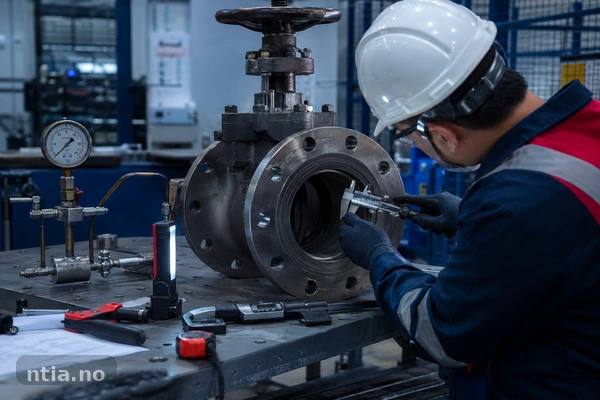
Quality and CNC inspection resources emphasise a core set of measuring tools: calipers, micrometers, bore gauges, dial indicators and height gauges.
3.1 Must-Have Dimensional Tools
For most valve inspectors, the base set is:
- Digital calipers (150–300 mm)
- For overall dimensions, face-to-face, flange thickness, bolt-circle spot checks
- Outside micrometers
- For shaft diameters, stem diameters, wall thickness (where accessible) with tighter tolerances than calipers
- Depth gauges (or depth function on calipers)
- For seat depths, groove depths, recesses
- Bore gauges / telescoping gauges + micrometer
- For internal seat diameters and bore checks in precision applications
- Feeler gauges
- For checking gaps at flanges, seat contact in some designs, actuator couplings
Together, these allow you to verify key dimensions in drawings, standards and datasheets.
3.2 When to Add Higher-End Metrology Tools
Depending on your scope, you may also need:
- Dial indicators
- For stem straightness, actuator travel, runout
- Height gauges and surface plates
- For precise layout, flatness checks of flanges or mounting faces
- Surface roughness testers
- For critical sealing surfaces where roughness must meet a specified Ra value; common in quality-control equipment lists.
In all cases, the value of these tools depends heavily on calibration and handling, which we will cover later.
NTIA’s Write a Valve Inspection Report (With Sample) and Templates for QA/QC Inspection Teams show how to capture dimensional readings in a way that auditors and clients can follow.
🔗 https://ntia.no/write-a-valve-inspection-report/
🔗 https://ntia.no/templates-for-qa-qc-inspection-teams/
4. Pressure Testing & Leak-Testing Equipment
Hydrostatic and pneumatic tests are at the heart of standards like API 598, ISO 5208 and EN 12266-1. They define specific test pressures, durations and allowable leakage levels for different valve designs.
4.1 The Test Bench
For serious valve inspection work, a valve test bench is usually the largest investment.
Typical capabilities include:
- Hydraulic and/or pneumatic pressure generation
- Clamping system appropriate for flanged, welded or threaded ends
- Multiple test circuits (shell, seat, backseat, sometimes safety valve opening)
- Range of pressures covering your typical valve classes
- Instrumentation: pressure gauges, transducers, flow meters, data logging
Test benches compliant with API 598, ISO 5208 or EN 12266-1 make it easier to justify your results to clients, because the test method matches the standard.
However, owning a large test bench is not always necessary:
- Small users may rely on portable pumps and rent test bench time from vendors or third-party labs.
- Field tests often use portable hydro or pneumatic test rigs with appropriate safety measures.
4.2 Pressure Generation and Control
At minimum, you need:
- Hydraulic hand or powered pumps
- For hydrostatic shell and seat tests
- Gas regulators and manifolds
- For pneumatic seat tests or low-pressure tests
Key points:
- Pumps and regulators must be compatible with the test media and pressure ranges.
- Hoses, fittings and test fixtures must be rated for the maximum test pressure with appropriate safety margins.
NTIA’s Valve Pressure Testing Safety: Do’s & Don’ts discusses how these choices affect safe setups.
🔗 https://ntia.no/valve-pressure-testing-safety/
4.3 Measurement Instruments for Pressure and Leakage
Pressure-testing best-practice guides emphasise calibrated gauges and clear leakage observation methods.
You should consider:
- Analogue or digital pressure gauges
- Suitable range, accuracy class and dial size
- Mounted where the operator can safely read them
- Reference master gauge or deadweight tester
- For periodic verification of working gauges
- Flow meters or rotameters (for some test setups)
- To verify leakage rates where volumetric criteria apply
- Bubble-count rigs or measuring cylinders
- For leakage classes that specify bubbles per minute or mL per minute (ISO 5208, EN 12266-1).
- High-quality leak detection solution
- For packing, flanges and fittings during pneumatic tests
Invest in good gauges and keep their calibration certificates available. A cheap gauge that nobody believes will cost you more in arguments than a good one ever will.
5. Torque, Actuation and Functional-Test Tools
Valve inspection is not complete without confirming that the valve operates correctly:
- It moves to the right positions
- The actuator delivers enough torque or thrust
- Position feedback and limit switches work as intended
Control-valve and functional-testing guides highlight the need for appropriate torque and instrumentation tools.
5.1 Torque Tools
You should have:
- Torque wrenches
- For bolting (body/bonnet, packing glands, actuator mounting) within specified torque ranges
- Torque multipliers or hydraulic torque wrenches (for larger valves)
- Torque measurement devices (if you need to verify actual operating torque vs actuator capability)
Operating torque is directly relevant to whether the valve is usable in service. It links to decisions described in Common Vendor Nonconformities & Fixes.
🔗 https://ntia.no/common-vendor-nonconformities/
5.2 Stroke and Position Tools
For control and actuated valves:
- Stroke gauges or rulers
- To verify travel on linear valves
- Protractors or digital angle indicators
- For rotary valves (ball, plug, butterfly)
- Stopwatch or timer
- For stroke time and opening/closing speed
These tools help confirm that the valve meets functional requirements in datasheets and client specifications.
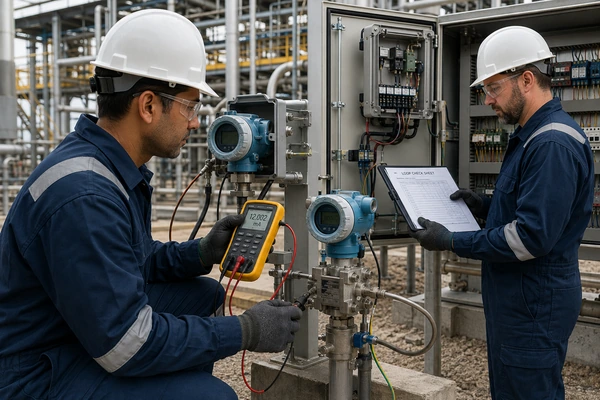
5.3 Instrumentation and Loop Tools
Where valves are integrated into control systems, you may also need:
- Loop calibrators and multimeters
- For 4–20 mA positioners, limit switches and solenoids
- Handheld communicators (for smart positioners)
This moves you closer to control-valve testing territory, as seen in control-valve testing articles.
6. Coating, Surface and Material Tools
Valves are often coated or lined, and their sealing performance depends on surface condition.
Industrial QC and coating equipment catalogues show a consistent set of surface tools: coating-thickness gauges, roughness testers and hardness testers.
6.1 Coating and Surface Tools
Useful tools include:
- Coating thickness gauges
- To verify painting systems on valve bodies and actuators meet specification
- Surface roughness testers
- For flange faces and critical sealing surfaces
- Portable hardness testers (selectively, and with care)
- For verifying base material or weld hardness, subject to procedure and client approval
These help detect issues such as over- or under-blasting, incorrect coating systems or damage during handling and transport.
6.2 Material and Identification Tools
Material identification is a separate discipline, but some basic tools can help valve inspectors:
- Portable PMI (positive material identification) analysers for high-risk cases (often rented or provided by specialised vendors)
- Simple magnetic test devices (to distinguish, for example, carbon steel from some stainless steels in a rough way)
For the underlying logic and documentation of material specs, see NTIA articles EN vs ASTM: Common Material Specs Mapped and Heat Numbers, Traceability & Certificate Matching.
🔗 https://ntia.no/en-vs-astm-common-material-specs-mapped/
🔗 https://ntia.no/heat-numbers-traceability-certificate-matching/
7. Supporting Equipment and Safety Gear
Valve inspection, especially pressure testing, is not just about instruments. Safety resources emphasise appropriate PPE and safe-pressure-testing practices.
You should also consider:
- Proper lifting and handling gear
- Slings, shackles, lifting beams and trolleys suitable for valve weights
- Valve supports and stands
- To prevent rolling or tipping during inspection and testing
- Barriers or blast shields around test benches
- To protect personnel from potential failures during pressure tests
- PPE appropriate to the pressure, media and environment
- Eye and face protection, hearing protection, gloves, flame-resistant clothing where needed
NTIA’s Valve Pressure Testing Safety: Do’s & Don’ts goes deeper into safe setups and behaviours around pressurised equipment.
8. Choosing the Right Tool Set for Your Role
Not every inspector needs a full lab. Think in terms of use cases.
8.1 Plant or Site Inspector (End User)
Typical scope:
- Periodic checks on installed valves
- Simple leak and function tests
- Verification after maintenance
Minimum kit:
- Visual tools (flashlight, mirrors, leak-detection spray)
- Basic dimensional tools (calipers, feeler gauges)
- Portable pressure test kit for low-pressure checks (where allowed)
- Torque wrench for packing adjustments and flange bolting
Heavier hydrostatic and full-standard testing can be outsourced to vendors or third-party shops.
8.2 Vendor / Third-Party Inspector at Manufacturer
Scope:
- Witnessing FAT at valve manufacturers or repair shops
- Reviewing test bench setups
- Signing off against standards such as API 598, ISO 5208 and EN 12266-1
Typical kit:
- Strong visual and dimensional set (Sections 2 and 3)
- Personal reference gauge or a way to verify vendor gauges
- Knowledge to assess test bench design and procedures rather than owning the bench
NTIA’s Write a Valve Inspection Report (With Sample) is directly relevant here.
8.3 Workshop / Repair Shop
Scope:
- Disassembly, refurbishment and full re-testing of valves
You will need:
- Full test bench capability for your valve ranges
- Comprehensive dimensional and surface-measurement tools
- Coating inspection tools
- Good torque and functional-test instruments
- A robust system for calibration, maintenance and documentation of all tools
In this environment, your tool set becomes an integral part of your business offering.
9. Calibration, Care and Documentation of Instruments
Metrology and valve-testing guidance repeatedly stress one point: calibrated equipment is non-negotiable for credible test results.
9.1 Calibration Principles
For valve inspection tools, you should:
- Define which instruments require calibration
- Pressure gauges, torque tools, dimensional instruments, flow meters, critical timers and recorders
- Set calibration intervals based on manufacturers’ recommendations, usage and risk
- Use competent calibration providers and keep calibration certificates accessible
Standards such as API 598 and EN 12266-1 implicitly assume testing is done with calibrated equipment, and audit guides highlight this as a key expectation.
9.2 Handling and Storage
Tools lose accuracy quickly if they are:
- Dropped, contaminated, or stored in poor environments
- Used outside their intended range
Basic good practice:
- Store precision tools (micrometers, calipers, indicators) in protective cases
- Keep them away from extremes of temperature and humidity
- Train personnel on correct usage and zeroing procedures
9.3 Linking Tools to Inspection Records
Your inspection records (see Inspection Evidence & Recordkeeping: What Auditors Expect) should show:
🔗 https://ntia.no/inspection-evidence-and-recordkeeping/
- Which instrument was used (ID number)
- Its calibration status at the time of use
- For test benches, a link to the bench’s own calibration and verification records
This makes your inspection reports much easier to defend in client or accreditation audits.
10. FAQ – Buying and Using Valve Inspection Tools
Q1. What is the minimum tool set for a small plant inspector?
Typically: good flashlight, mirrors, leak-detection spray, basic calipers and feeler gauges, a reliable torque wrench and access to a calibrated pressure gauge or portable test kit for limited tests. Anything beyond that can be outsourced or rented.
Q2. Do we need a full test bench to comply with API 598 or EN 12266-1?
Not necessarily. If you do not manufacture or refurbish valves, you can witness tests at qualified vendors or third-party labs that have compliant benches. What you do need is enough knowledge and personal tools to verify that the vendor’s setup and instrumentation are adequate.
Q3. How often should we calibrate our valve inspection instruments?
It depends on usage and risk, but many organisations calibrate pressure gauges and torque tools at least annually, with shorter intervals for heavily used instruments. Precision dimensional tools follow similar intervals. The important part is to have a documented plan and to follow it.
Q4. Is it worth buying premium brands for measuring tools?
For core instruments (pressure gauges, torque tools, micrometers, calipers), higher-quality equipment usually offers better stability, service support and confidence. The cost of one disputed test or failed audit often exceeds the price difference.
Q5. Should we buy or rent specialised tools like PMI analysers and advanced test benches?
If you only occasionally need such tools, renting or using specialised service providers is often more cost-effective. Buying is sensible when you have regular, high-volume work that justifies the investment and the ongoing calibration and maintenance effort.
11. If You Buy Valve Inspection Tools, Invest in Skills Too
Buying better tools does not automatically create better inspections.
To use these tools effectively, inspectors need:
- A clear understanding of valve design and failure modes
- Familiarity with testing standards (API 598, ISO 5208, EN 12266-1)
- Practical habits for safe pressure testing and accurate measurement
- Strong reporting skills to turn measurements into credible inspection records
NTIA’s online Valve Inspection Training is designed exactly for this:
- It walks through real-world inspection scenarios at vendors and in workshops
- It explains how to select and use tools and test benches in line with standards
- It shows how to document your work in a way that clients, auditors and managers can trust
If you are about to invest in valve inspection tools – or already have them but are not getting the value you expected – structured training is the logical next step. With the right combination of tools, methods and documentation, your valve inspection work becomes safer, faster and much easier to defend.