
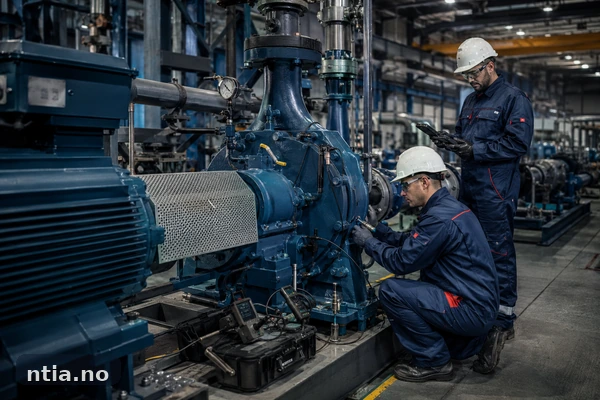
Rotating equipment inspection is the quality control process used to verify pumps, compressors, turbines, gearboxes, motors and related mechanical systems before they are accepted for delivery, installation, commissioning or operation.
In industrial projects, rotating equipment is often critical to production, safety and reliability. A pump, compressor or turbine may look acceptable from the outside, but hidden problems in alignment, vibration, materials, assembly, performance or documentation can create serious failures after start-up.
For QA/QC inspectors, vendor inspectors, mechanical inspectors and project quality teams, rotating equipment inspection is not only about checking physical condition. It is about confirming that the equipment has been manufactured, assembled, tested and documented according to the purchase order, approved drawings, project specifications and applicable standards.
If you want structured training on this subject, NTIA provides a Rotating Equipment Inspection Training Course covering pumps, compressors, inspection techniques, condition monitoring, performance evaluation and QA/QC requirements for industrial projects.
Rotating equipment refers to machines that use rotating motion to transfer energy, move fluids, compress gases, generate power or support mechanical operation.
Common examples include:
These machines are widely used in oil and gas, petrochemical, power generation, marine, manufacturing and process industries. Because they usually operate under continuous or demanding conditions, even a small defect can lead to vibration, leakage, overheating, reduced performance or equipment failure.
That is why rotating equipment inspection must look beyond appearance. The inspector needs to verify the equipment, the tests and the documentation together.
Rotating equipment inspection is the verification of mechanical equipment, components, assembly, testing, performance and documentation against approved project requirements.
It may take place at different stages of a project:
For vendor or source inspection, the focus is usually on checking the equipment at the manufacturer’s facility before release. For site inspection, the focus is more on installation, alignment, preservation, pre-commissioning checks and readiness for operation.
In both cases, the purpose is the same: to confirm that the equipment is acceptable before it moves to the next stage.
Rotating equipment has moving parts, tight clearances, dynamic loads and operating conditions that can expose defects quickly.
Poor inspection or incomplete testing can lead to:
Many of these issues are easier and cheaper to identify during manufacturing or FAT than after installation. A missed problem at the vendor shop can become a major operational issue later.
Good rotating equipment inspection helps reduce rework, protect equipment integrity and support safe project handover.
Rotating equipment inspection and rotating equipment maintenance are related, but they are not the same.
| Area | Rotating Equipment Inspection | Rotating Equipment Maintenance |
| Main purpose | Verify compliance before acceptance or handover | Keep equipment reliable during operation |
| Typical stage | Manufacturing, FAT, installation, pre-commissioning | Operation, shutdown, overhaul |
| Main focus | QA/QC, testing, acceptance, documentation | Reliability, repair, troubleshooting |
| Common activities | Document review, visual checks, FAT, vibration review, dossier review | Lubrication, monitoring, bearing replacement, repair |
| Main output | Inspection report, test records, punch list, release note | Maintenance report, repair record, reliability data |
A maintenance team asks, “How do we keep this equipment running?”
An inspector asks, “Is this equipment acceptable according to the approved requirements?”
That difference is important. This guide focuses on inspection, quality control, testing and acceptance — not routine maintenance.
Rotating equipment inspection is closely connected to vendor inspection because many pumps, compressors, turbines and packaged systems are inspected at the manufacturer’s facility before shipment.
During vendor inspection, the inspector may review documents, verify materials, check assembly, witness tests, review FAT records, inspect preservation and confirm that the final dossier is complete.
This makes the vendor inspection process especially important for rotating equipment. If a defect is found before shipment, it is usually easier to correct than after delivery to site.
For inspectors who want to understand the broader source inspection workflow, see also: vendor inspection process.
Pumps are among the most common rotating equipment items in industrial facilities. They are used to move liquids through process, utility, cooling, firewater, chemical injection and transfer systems.
A pump inspector may review the pump datasheet, casing material, impeller material, shaft, mechanical seal, baseplate, nozzle orientation, nameplate data, hydrostatic test, performance test, mechanical run test, vibration readings and final documentation.
For pumps, inspection is not only about appearance. Performance, vibration, mechanical integrity and documentation are all important.
Compressors are used to increase gas pressure. They may be centrifugal, reciprocating, screw or other types depending on the application.
Compressor inspection may include checking the casing, rotor or piston components, bearings, seals, lubrication system, cooling system, alignment, vibration, control devices, performance data and final records.
Compressor inspection can be more complex than pump inspection because compressors often have critical operating conditions, protection systems and performance requirements.
Turbines convert energy from steam, gas or other media into mechanical power. In some projects, turbines drive pumps, compressors or generators.
Inspection may include review of casing condition, rotor condition, blades, bearings, seals, lubrication system, speed control, overspeed protection, vibration monitoring and test records.
For turbine inspection, attention to clearances, rotor condition, balance, vibration and protective systems is essential.
Gearboxes, motors, couplings, seal systems and lubrication systems are often supplied as part of rotating equipment packages.
Inspectors should not treat these items as secondary. A pump or compressor may be acceptable by itself, but poor coupling installation, wrong motor data, inadequate lubrication or damaged seal piping can still create serious reliability issues.
Auxiliary systems should therefore be checked as part of the complete rotating equipment package.
Rotating equipment inspection normally follows a staged process. The exact scope depends on the project, equipment type, ITP and purchase order requirements.
Inspection should start with document review. Without approved documents, the inspector has no clear acceptance basis.
Typical documents include:
The inspector should understand what must be checked, what must be witnessed and what records must be included in the final dossier.
Material and component verification confirms that the supplied equipment matches the approved requirements.
This may include checking nameplate data, serial numbers, heat numbers, casting or forging identification, pressure-containing parts, shaft material, impeller material, casing material, fasteners, gaskets, seals and spare parts.
Material traceability is especially important for critical or pressure-containing components. A component may look correct but still be unacceptable if its documentation is missing or inconsistent.
Visual and dimensional inspection verifies the physical condition and basic conformity of the equipment.
Typical checks may include:
Dimensional issues found after delivery can create installation delays. For this reason, visual and dimensional checks before shipment are important.
Some rotating equipment packages include welded parts, pressure-containing components, baseplates, auxiliary piping, supports or fabricated assemblies.
Inspection may include review of:
This is where rotating equipment inspection connects with welding and NDT control. Welded baseplates, auxiliary piping and pressure-containing parts must be properly inspected and documented before equipment release.
For a broader explanation of weld inspection, NDT methods and NDT report review, see: welding and NDT inspection.
Assembly inspection confirms that the equipment has been assembled correctly before testing or shipment.
Depending on the equipment, this may include checking rotor installation, shaft condition, bearing arrangement, mechanical seal installation, casing closure, bolting, gaskets, coupling, lubrication system, auxiliary piping and cleanliness.
Assembly quality has a direct effect on test results. Poor assembly can cause vibration, leakage, overheating or mechanical damage during the mechanical run test or commissioning.
Hydrostatic testing may be required for pressure-containing parts such as pump casings, compressor components, coolers or auxiliary pressure systems.
The inspector should verify the approved test procedure, test pressure, holding time, calibrated gauges, leakage condition, pressure drop, acceptance criteria and signed test report.
The purpose is not only to witness pressure being applied. The result must be traceable, documented and consistent with project requirements.
A mechanical run test verifies the mechanical behavior of rotating equipment under controlled operating conditions.
It may include checks for:
For many rotating equipment items, the mechanical run test is one of the most important inspection activities before shipment.
The inspector should confirm that the test conditions, measuring instruments, acceptance limits and recorded results are clear.
Vibration is one of the most important indicators of rotating equipment condition. High vibration may indicate imbalance, misalignment, looseness, bearing problems, rotor issues, coupling problems or poor installation.
During inspection, vibration readings should be reviewed together with the test condition, measurement points, equipment speed, acceptance criteria and calibration status of the measuring instruments.
Performance testing may also be required, especially for pumps and compressors. For pumps, this may include flow, head, efficiency, power consumption and NPSH where required. For compressors, it may include flow, pressure ratio, temperature, power and control response.
A machine can appear mechanically acceptable but still fail to meet the required performance. That is why performance review is an important part of rotating equipment inspection.
A Factory Acceptance Test, or FAT, is performed at the vendor’s facility before the equipment is released for shipment.
For rotating equipment, FAT may include:
FAT is one of the best opportunities to identify problems before the equipment reaches site.
Before attending FAT, the inspector should review the ITP and FAT procedure carefully. Otherwise, important witness points or records may be missed.
Rotating equipment may be stored or transported for long periods before installation. Poor preservation can lead to corrosion, contamination or mechanical damage before the equipment is used.
Preservation inspection may include checking internal protection, external coating, flange covers, shaft locking, desiccants, rust prevention, lubrication status, temporary covers and preservation records.
Packing inspection should confirm that the equipment is protected for transport and that loose items, spare parts, markings and documentation are properly controlled.
The Inspection and Test Plan defines inspection activities, acceptance documents and inspection involvement.
For rotating equipment, an ITP may include:
Common inspection points include:
| Inspection Point | Meaning |
| Hold Point | Work cannot continue until required inspection or approval is completed |
| Witness Point | Client or inspector may attend and witness the activity |
| Review Point | Documents or records must be reviewed |
| Surveillance | General monitoring of work quality and process compliance |
For vendor inspection, the ITP is essential. It tells the inspector what to attend, what to review and what evidence must be collected.
A detailed checklist depends on the equipment type and project requirements. However, a practical rotating equipment inspection checklist should normally cover:
| Area | Typical Checks |
| Documents | Datasheets, drawings, ITP, test procedures, material certificates |
| Identification | Tag number, serial number, nameplate, model, rating |
| Materials | Casing, shaft, impeller, fasteners, seals, traceability |
| Visual condition | Damage, corrosion, cleanliness, coating, preservation |
| Assembly | Bearings, seals, coupling, bolting, guards, auxiliary systems |
| Tests | Hydrostatic test, mechanical run test, vibration, performance test |
| Records | Test reports, calibration certificates, punch list, final dossier |
The checklist should not be used mechanically. The inspector must always compare findings against approved project requirements.
Common findings during rotating equipment inspection include:
The inspector’s role is to record findings clearly, follow up corrective actions and verify closure before release or handover.
A rotating equipment item should not be accepted based only on visual condition. The documentation must also be complete.
A typical final dossier may include:
The inspector should check that all reports are traceable to the correct equipment tag, serial number and project requirement.
Incomplete documentation can delay handover even when the equipment itself is physically ready.
API SIRE stands for Source Inspector Rotating Equipment. It is associated with source inspection of rotating equipment such as pumps, gears, compressors and turbines.
For NTIA’s audience, the practical value is understanding how source inspection works:
A rotating equipment inspector may not always be preparing for API SIRE, but the source inspection mindset is highly relevant for vendor inspection and QA/QC roles.
A rotating equipment inspector needs both mechanical understanding and inspection discipline.
Important skills include:
The inspector does not need to design the equipment, but must understand enough to verify that it meets project requirements.
Rotating equipment inspection training is useful for professionals who inspect, verify, maintain or manage mechanical equipment quality in industrial projects.
This includes:
The training is especially relevant for teams working with pumps, compressors, turbines, packaged equipment, mechanical systems and vendor-supplied rotating equipment.
Professionals who move into rotating equipment inspection often come from mechanical inspection, maintenance, reliability, vendor inspection, QA/QC or commissioning backgrounds.
A practical training path should cover:
NTIA’s Rotating Equipment Inspection Training Course is designed for professionals who need structured knowledge of pumps, compressors, inspection techniques, condition monitoring, performance evaluation and QA/QC requirements.
You can also check the upcoming rotating equipment inspection training dates in the NTIA training calendar.
Rotating equipment inspection is the quality control process used to verify pumps, compressors, turbines, gearboxes, motors and related components against approved drawings, specifications, test procedures and project requirements.
A rotating equipment inspector checks documents, materials, components, assembly condition, dimensional details, mechanical run test results, vibration readings, performance test records, preservation, packing and final documentation.
Inspection focuses on verifying equipment compliance before acceptance, shipment, installation or handover. Maintenance focuses on keeping equipment reliable during operation through monitoring, servicing, repair and overhaul.
FAT, or Factory Acceptance Test, is performed at the vendor’s facility before shipment. For rotating equipment, it may include document review, visual inspection, mechanical run test, vibration checks, performance testing and final dossier review.
A mechanical run test verifies that rotating equipment can operate smoothly under controlled test conditions without unacceptable vibration, overheating, leakage, noise or instability.
Vibration is checked because excessive vibration may indicate imbalance, misalignment, bearing issues, looseness, rotor problems or other mechanical defects that can lead to premature failure.
A final dossier may include approved drawings, datasheets, material certificates, inspection reports, NDT reports, hydrostatic test reports, mechanical run test reports, vibration records, performance test reports, calibration certificates and release documents.
Rotating equipment inspection is often performed during vendor or source inspection before shipment. Inspectors review documents, witness tests, check FAT records, verify preservation and confirm that the equipment is acceptable before delivery.
Rotating equipment inspection training is useful for mechanical inspectors, vendor inspectors, QA/QC engineers, maintenance engineers, reliability personnel, commissioning teams and project quality professionals working with pumps, compressors and turbines.
Rotating equipment inspection is a critical part of industrial QA/QC. Pumps, compressors, turbines and related systems must be inspected carefully because mechanical problems can quickly become operational, safety or reliability failures.
A strong inspection process verifies not only the physical equipment, but also the tests, records, performance data, vibration results, preservation status and final documentation.
For inspectors, the key is to follow approved requirements, understand the ITP, witness the right tests, identify findings clearly and confirm that all records are complete before acceptance.
For professionals who want to build practical competence in this field, NTIA’s Rotating Equipment Inspection Training Course provides structured training in rotating equipment inspection, testing, condition monitoring and QA/QC requirements. Upcoming course dates are available in the NTIA Training Calendar.

At NTIA (Norwegian Technical Inspection Academy), we specialize in delivering world-class training programs in vendor inspection, quality surveillance, and technical compliance – specifically tailored for professionals in the oil, gas, and energy industries.
Copyright © 2025 by NTIA. All Rights Reserved.